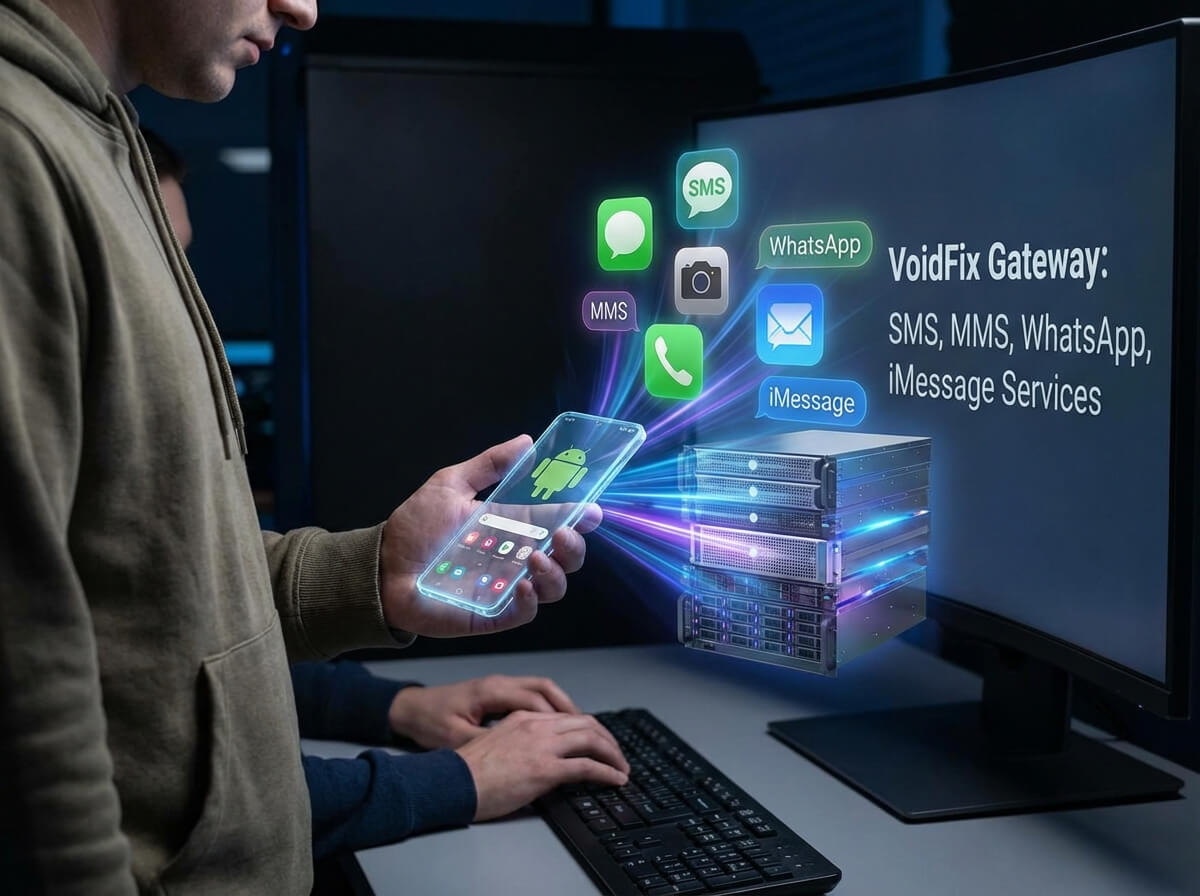
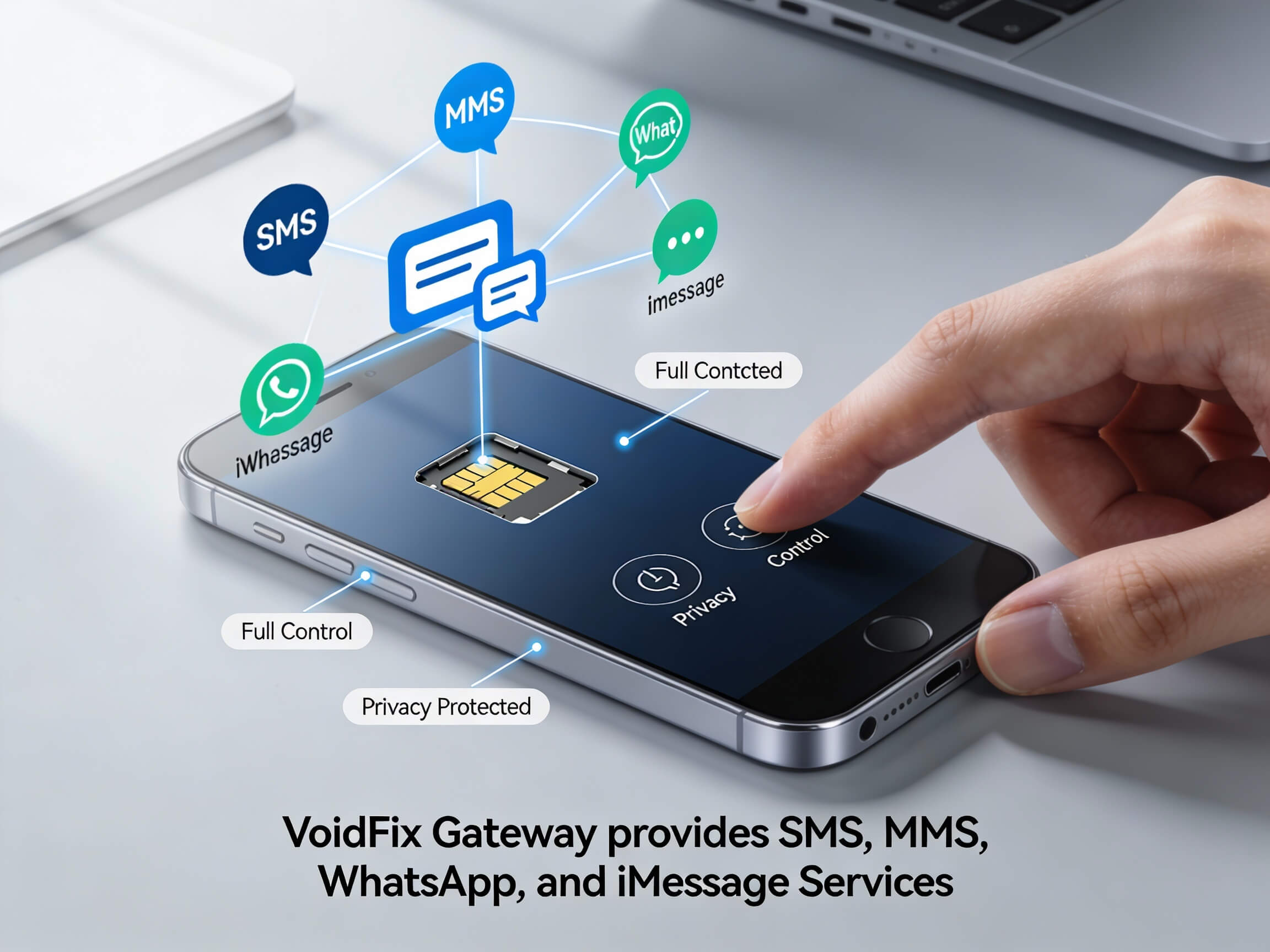
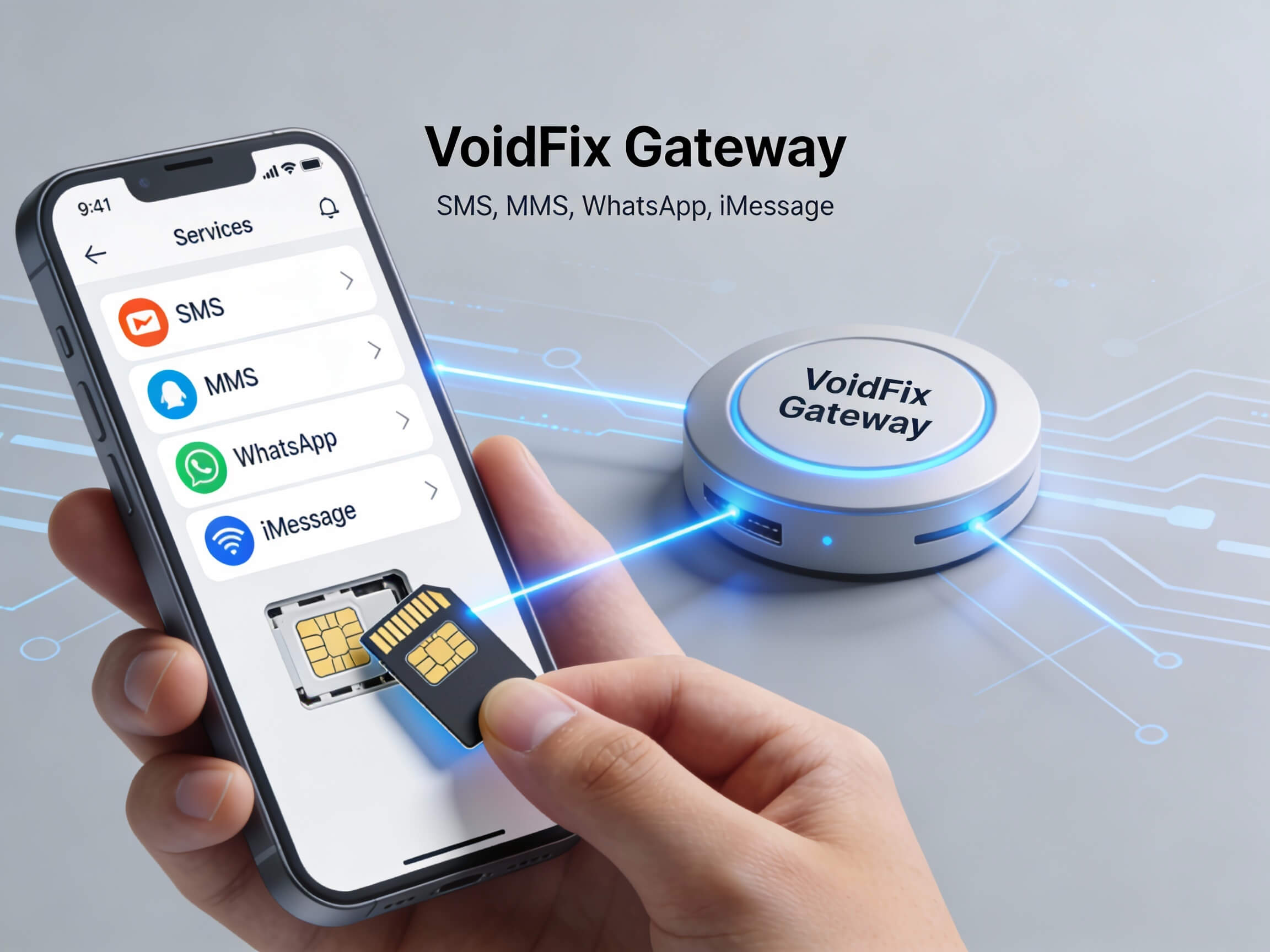
iMessage vs SMS is one of the most important channel decisions in business messaging. iMessage brings premium blue-bubble trust and rich features to Apple users, while SMS delivers near-universal reach across every phone on every carrier.
The smartest brands do not pick just one; they use each where it wins and deliver both reliably and affordably. That is what VoidFix Gateway makes possible.
iMessage vs SMS: The Core Difference
The iMessage vs SMS debate comes down to how each message travels and how it appears. SMS, short message service, runs over carrier networks and works on virtually every mobile phone ever made, regardless of brand, operating system or model. It shows up in a green bubble and is limited to short plain text and basic media. iMessage, by contrast, runs over the internet exclusively between Apple devices, appears in a blue bubble, and supports rich media, read receipts, typing indicators and end-to-end encryption.
That single architectural difference cascades into everything else, trust, features, reach, cost and deliverability. Neither channel is simply better; each is optimized for a different job. The goal of this comparison is to help you understand exactly when to reach for which, so you stop treating all text messaging as one undifferentiated channel.
Trust and Perception: Blue vs Green
The most underrated difference is psychological. Apple users have learned to associate the blue bubble with real, personal conversations, and the green bubble with everything else, including bulk marketing and, increasingly, spam and phishing. When your business message arrives in blue, it borrows that built-in credibility. When it arrives in green, it competes with every anonymous text the recipient distrusts.
For brands selling to iPhone-heavy audiences, this perception gap is real money. A blue-bubble message is more likely to be opened, read fully and acted on, and links inside it feel safer to tap. SMS still gets read, its open rates remain famously high, but it does not carry the same premium signal. If trust and brand presentation are central to your message, iMessage has a clear edge.
Feature Comparison at a Glance
Here is how the two channels stack up across the dimensions businesses care about most.
Reach: SMS wins decisively, working on every phone and carrier worldwide. iMessage only reaches Apple devices.
Rich media: iMessage wins, supporting high-resolution images and video. SMS is limited to text, with low-quality MMS at best.
Read receipts and typing indicators: iMessage only. SMS offers no native delivery insight of this kind.
Encryption: iMessage is end-to-end encrypted between Apple devices. Standard SMS is not.
Trust signal: iMessage's blue bubble carries stronger perceived credibility than SMS's green bubble.
Universality: SMS is the lowest common denominator that always works, which is its greatest strength.
The pattern is clear: SMS is about reach and certainty, while iMessage is about richness and trust.
When to Choose SMS
SMS remains the right choice in several common scenarios, and dismissing it would be a mistake. Because it reaches every device, it is the safest channel for messages that absolutely must arrive.
Mixed-device audiences: When your list includes Android users or you cannot verify device type, SMS guarantees delivery.
Critical alerts and OTPs: Two-factor codes, security notices and urgent operational alerts need universal, immediate delivery.
Maximum-reach campaigns: Broad announcements where you want to touch every contact regardless of phone.
Simple, fast notifications: Short reminders and confirmations where rich media adds nothing.
iMessage earns its place whenever the relationship benefits from looking premium and feeling conversational, and when you know the recipient is on an Apple device. It is the channel of choice for high-value e-commerce updates, VIP offers, branded order confirmations and real-time support exchanges where read receipts and typing indicators matter. It also suits sensitive account and security communications, because the blue bubble feels safer than anonymous SMS and is therefore taken more seriously.
The trade-off is that authentic iMessage can only be delivered from genuine Apple devices and accounts. If a recipient is not reachable as an iMessage, the message falls back to SMS and loses its advantages. That is why the ability to send real, device-based iMessage is the gating factor for using this channel well.
Cost and Deliverability: The Hidden Decider
Features matter, but cost and deliverability often decide which channel a business can actually afford to use at scale. Traditional SMS through aggregators carries per-message fees and, for automated campaign traffic, A2P 10DLC registration, carrier vetting and approval delays, all of which add cost and friction. As volume grows, filtering can also throttle a portion of your messages before they reach a phone.
VoidFix Gateway changes the math for both channels. SMS is sent from real SIM-based numbers and iMessage from genuine Apple devices, rather than the traditional aggregator pipeline. The result is high deliverability on both, plus two structural savings: no A2P or 10DLC registration required, and no per-message platform fees in favor of a flat, predictable subscription that helps businesses save up to around 80 percent on messaging costs. When cost is no longer tied to send volume, you are free to use the best channel for each contact instead of the cheapest one. To map this against your current spend, you can contact our team.
The Real Answer: Use Both, Intelligently
The most effective programs do not treat iMessage vs SMS as an either-or choice. They route each contact to the channel where it performs best, sending authentic blue-bubble iMessage to Apple users for trust and richness, and reliable SMS to everyone else for guaranteed reach. This blended approach captures the strengths of both while letting each cover the other's gaps.
Running both from a single platform is what makes this practical. VoidFix Gateway supports SMS, WhatsApp and iMessage together, with the same predictable pricing and real-device, real-number delivery across the board, so you can build one strategy that intelligently spans every customer.
Conclusion: Pick the Channel, Not the Compromise
In the iMessage vs SMS comparison, there is no universal winner, only the right tool for each moment. SMS gives you universal reach and certainty; iMessage gives you premium trust and rich, conversational engagement with Apple users. The businesses that win simply use both well and deliver both reliably and affordably. VoidFix Gateway makes that possible with real-device iMessage, SIM-based SMS, no A2P registration and no per-message fees, all from one platform. Start your free 7-day trial with no credit card required and reach every customer on the channel they trust most.