Short answer: Use WhatsApp for rich, two-way conversations with customers who already use the app, especially outside North America. Use SMS when a message must reach every phone with no app or data, such as codes, urgent alerts and reminders. Most businesses run both, with SMS as the safety net.
WhatsApp vs SMS is one of the first decisions a business makes when planning customer communication. Both reach phones in seconds, but they differ in reach, cost, features and the kind of conversations they support. This guide compares them side by side, then shows how to run both from one platform with VoidFix Gateway.
Why does the WhatsApp vs SMS choice matter?
Your channel shapes how customers experience your brand. SMS has been the default mobile channel for decades because it works on every handset, with no app and no data connection. WhatsApp grew into one of the most used messaging apps in the world. As of October 2026, WhatsApp says more than 3 billion people in over 180 countries use it. It brings rich chat, media sharing and a conversational feel that SMS was never built for.
The mistake many teams make is treating this as an either-or contest. The two channels solve overlapping but distinct problems. Knowing where each one shines helps you spend wisely, protect deliverability and meet customers where they are.
How do WhatsApp and SMS compare side by side?
| Factor | SMS | |
|---|---|---|
| What the recipient needs | The WhatsApp app, an account and a data connection | Any mobile phone with a text plan |
| Reach | Very high in Europe, Latin America, the Middle East and much of Asia; lower in North America | Almost every mobile number |
| Media and format | Images, video, documents, location, voice notes | 160-character text segments; MMS for basic media |
| Read receipts and typing indicators | Yes | No |
| Opt-in | Required by WhatsApp's business rules | Required by law in many countries (for example TCPA in the US) |
| Main delivery risk | Account restrictions or bans after complaints and blocks | Carrier filtering of high-volume or unsolicited texts |
| Cost with VoidFix Gateway | Flat plans from $19/mo | Flat plans from $49/mo with unlimited SMS |
| Best uses | Support, sales chats, order updates, rich offers | Codes, urgent alerts, reminders, mixed audiences |
Who can you reach on each channel?
Reach is where SMS still holds a structural advantage. Every mobile number can receive an SMS by default. There is nothing to install, no account to create and no internet needed. For the broadest possible audience, including older customers, rural areas or markets with low smartphone use, SMS is hard to beat.
WhatsApp reach is enormous but conditional. The recipient needs the app, an active account and a data connection. In much of Europe, Latin America, the Middle East and Asia, that is barely a limitation. In parts of North America, adoption is lower and SMS or iMessage may reach more of your list.
- Choose SMS when you need delivery to every phone, regardless of app or data.
- Choose WhatsApp when your audience lives in high-adoption regions and already chats there daily.
- Choose both when your list spans regions and you want WhatsApp engagement with an SMS safety net.
Which channel has better features for conversations?
WhatsApp pulls ahead here. Standard SMS is limited to 160 characters per segment and plain text. MMS adds images but is inconsistent and often costs more. WhatsApp supports a much richer experience.
With WhatsApp you can send images, video, documents and location pins. Conversations are threaded and persistent, and they feel like talking to a person rather than receiving a notification. Read receipts and typing indicators add immediacy that SMS cannot match. For support, sales and any back-and-forth, this richness helps you resolve things faster.
SMS still wins on simplicity. A one-time passcode, a gate change or an appointment reminder does not need rich media. It needs to arrive fast and be read at a glance. For the platform side of WhatsApp, our WhatsApp Business API guide goes into detail.
Is WhatsApp cheaper than SMS?
It depends on the route. Traditional SMS through aggregators carries a per-message fee that adds up at scale. In the US, automated business texting through those providers also needs A2P 10DLC registration, with vetting, campaign approval and ongoing fees.
The official WhatsApp Business Platform charges per delivered message. Meta's pricing documentation says this per-message model has applied since July 1, 2025, with rates that depend on the template category (marketing, utility or authentication). Messages that customers send to you are not charged.
VoidFix Gateway uses flat monthly plans instead. SMS goes out from real SIM cards in Android phones, and WhatsApp runs on your own number, linked by QR code. There are no per-message platform fees, so high-volume senders can save up to 80% compared with per-message pricing.
- Map your monthly volume across both channels.
- Add up per-message fees and any registration costs for each route.
- Compare that against a flat subscription.
- Factor in deliverability, because undelivered messages are wasted spend.
Which channel delivers more reliably?
A message only matters if it arrives. Carriers filter SMS traffic that looks like spam, and messages from poorly reputed senders can be silently dropped. WhatsApp watches quality through user blocks and reports, and accounts that generate complaints can be restricted or banned.
Sending SMS from your own SIM is a person-to-person route, so A2P 10DLC registration is not part of the setup. That does not make it exempt from scrutiny. Carriers can still filter or suspend lines that send high volumes or unsolicited texts, and many consumer SIM plans limit commercial bulk use. VoidFix ships Number Warmup, Spintax, Number Pool rotation and opt-out handling to keep sending patterns natural. On WhatsApp, the same rule applies: message people who expect to hear from you, and pace your sends.
What compliance rules apply to each channel?
Both channels need consent. For SMS, laws such as the TCPA in the United States require opt-in, clear sender identification and a working opt-out keyword like STOP. The CTIA Messaging Principles and Best Practices (May 2023) set out the US industry's consent expectations. Quiet hours also apply in many places.
WhatsApp has its own rulebook. Meta's opt-in guidance says the opt-in must state that the person is agreeing to receive messages and name the business. On the official Business Platform, you can only send free-form replies inside a 24-hour customer service window and must use approved templates outside it.
Compliance is not a reason to favour one channel. It is a baseline you keep on both. Keep clean opt-in records, honour opt-outs at once and never buy lists.
How do you run WhatsApp and SMS together?
For most businesses, the best answer to WhatsApp vs SMS is to use both. Make WhatsApp the main channel for opted-in customers who want rich, conversational exchanges. Use SMS for time-critical alerts, one-time passcodes and contacts who are not on WhatsApp.
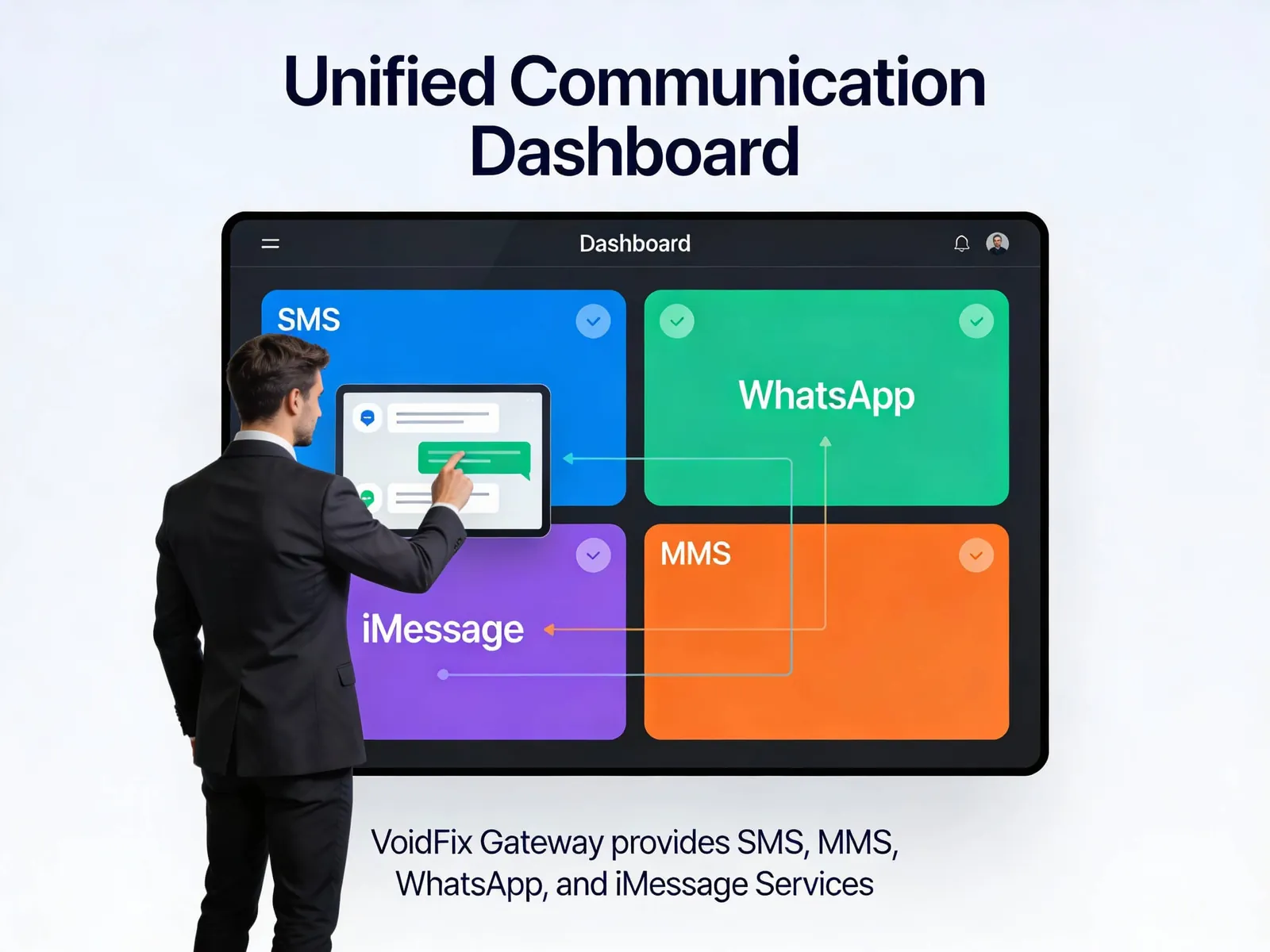
Running two channels used to mean two vendors, two integrations and two bills. With VoidFix Gateway you manage SMS, WhatsApp and iMessage from one platform that connects to GoHighLevel, Zapier, Make, webhooks and a REST API. You can route each message type to the right channel automatically.
Compare plans on our SMS pricing and WhatsApp pricing pages.
Frequently asked questions
Is WhatsApp better than SMS for business?
WhatsApp is better for rich, two-way conversations with customers who use the app. SMS is better for reaching every phone and for codes and urgent alerts. Most businesses use both.
Does WhatsApp work without an internet connection?
No. The recipient needs the WhatsApp app and a data or Wi-Fi connection. SMS works over the carrier network with no app or data.
Do I need opt-in to message customers on WhatsApp and SMS?
Yes. WhatsApp's business rules require opt-in that names your business, and SMS consent laws such as the TCPA require opt-in and a working opt-out.
Can I send WhatsApp and SMS from the same platform?
Yes. VoidFix Gateway runs SMS, WhatsApp and iMessage from one account and connects to GoHighLevel, Zapier, Make and a REST API. SMS and WhatsApp plans include a 7-day free trial.
Which channel should you start with?
There is no single winner in the WhatsApp vs SMS debate, only the right tool for each job. SMS gives you universal reach and simplicity. WhatsApp gives you rich, conversational engagement where adoption is high. Use both deliberately, on a platform with flat pricing. Start your free trial of VoidFix Gateway, or contact our team to plan the right mix for your audience.